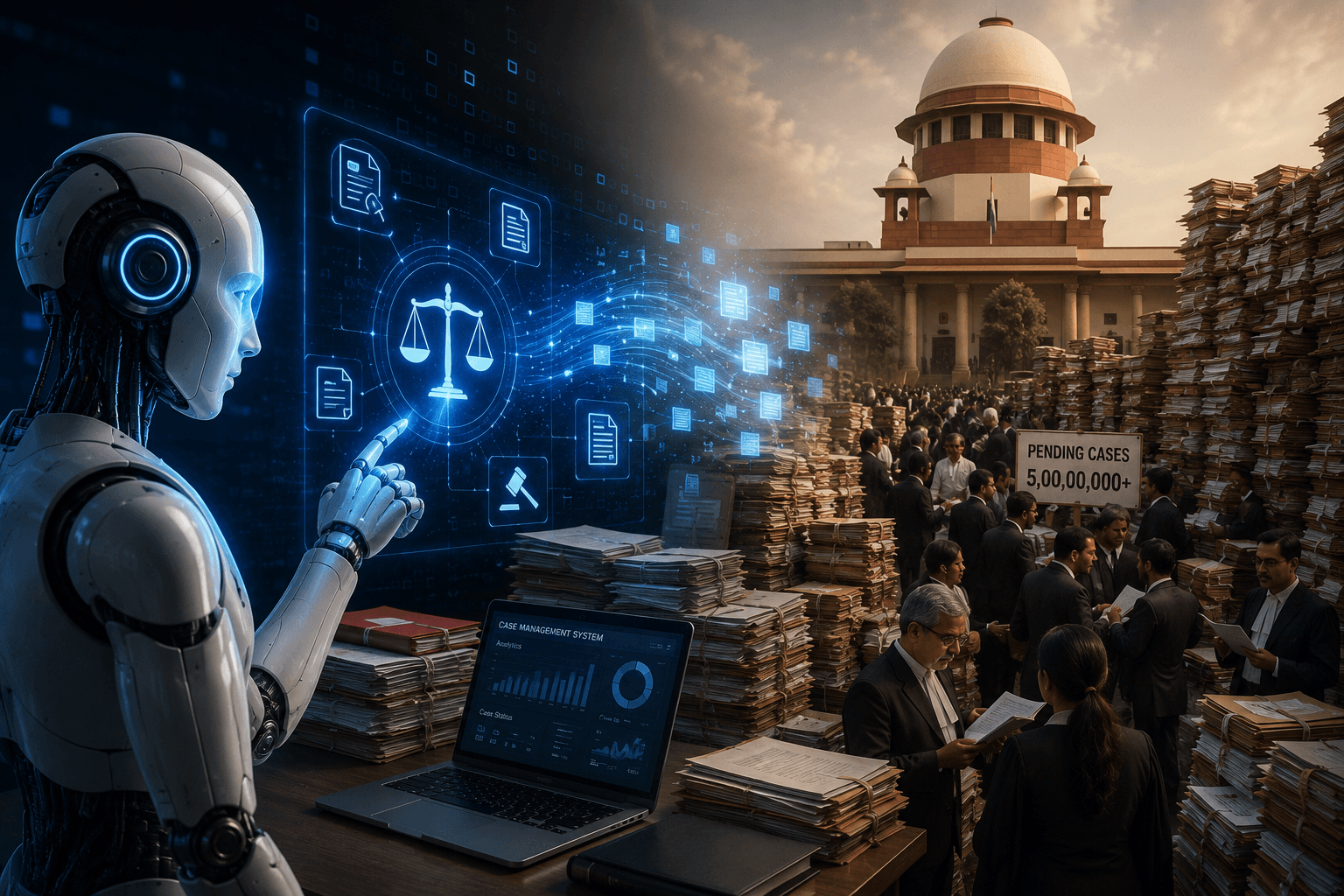
India's Growing Judicial Backlog
India's judicial system continues to face an enormous backlog of pending cases, causing significant delays in civil and criminal proceedings. These delays affect businesses, individuals, and the overall ease of enforcing legal rights.
A shortage of judges, increasing litigation, and complex legal procedures have accelerated the need for technology-driven solutions that improve efficiency without compromising fairness.
Artificial Intelligence, combined with Alternative Dispute Resolution (ADR), is emerging as a promising approach to modernizing India's justice delivery system.
How AI Is Transforming Legal Services
AI is already being adopted across courts, law firms, and legal technology platforms to automate legal research, document review, contract analysis, and case management. These technologies reduce repetitive work and allow legal professionals to focus on strategic decision-making.
Within the ADR ecosystem, AI can assist in dispute categorization, document analysis, settlement forecasting, and intelligent case routing, helping parties reach resolutions more efficiently.
While AI significantly improves productivity, it remains a decision-support tool rather than a replacement for judges, arbitrators, or legal experts.
Key Benefits of AI in ADR
Faster legal research and document review
AI-powered contract analysis
Smart dispute categorization
Predictive settlement insights
Automated case management
Efficient neutral selection
Reduced legal costs and delays
Improved accuracy in legal workflows
Enhanced online dispute resolution
Better access to justice through technology
Conclusion
The future of India's legal system will rely on a balanced partnership between technology and human expertise. AI has the potential to reduce delays, improve efficiency, and strengthen dispute resolution, particularly when integrated into modern ADR platforms.
By combining ethical AI practices with experienced legal professionals, platforms like PDR COURT can help build a faster, more accessible, and technology-driven justice ecosystem while ensuring fairness, transparency, and public trust.